
Workshop Resources
Startup Resources
A set of unaffiliated resources that may be useful to early-stage entrepreneurs

Tory Burch Foundation - Resources for Women Starting Businesses
Includes free resources (videos, articles, etc.) on how to write a business plan, access capital, apply for their fellows program, and participate in various summits and events. Industry agnostic.

Business Model Canvas Framework
This is a visual framework for establishing a business plan (but it also works for other kindred entities such as nonprofits.) If you’re intimidated by creating a business plan, or suspect your buisness plan needs optimization, a buisnes smodel canvas can help. This link to Canva can help you produce one. To learn more about how to use it, read the book, Business Model Generation.
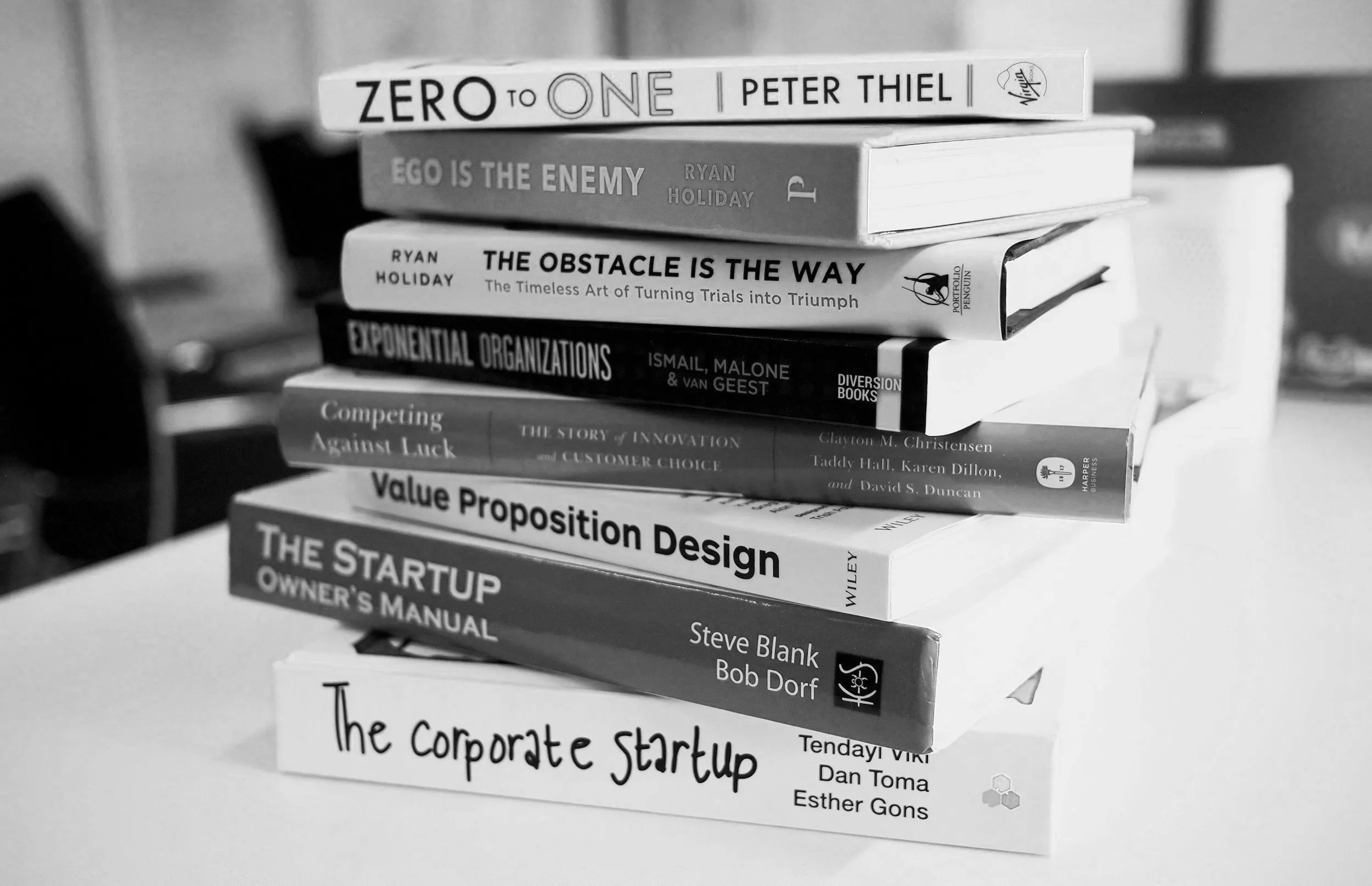
Book: The Startup Owners Manual
As the name suggests, this is a manual that provides a step-by-step guide to creating a business. This is one of the books historically recommended by the prestigious NSF I-Corps entrepreneur training program. It describes how to use the Business Model Canvas to test the inherent hypothesis of your company and product to ensure success.

Book: TED Talks: The Official TED Guide to Public Speaking
As an entrepreneur, you will be communicating frequently, and with diverse stakeholders and audiences. Much of this will involve public speaking. One of the best guides for honing your story and delivering all different types of talks is provided by this book, written by the former head of the TED conference, Chris Anderson.

Free Resources Provided by Startup Accelerators
There are MANY accelerators which can help startups launch and succeed. Y Combinator is one example. You might find their free “Y Startup School” resources and their library of videos, podcasts, and essays for founders useful. But don’t hesitate to look at relevant accelerators in your geography or industry to see what might be most useful to you.

Free Classes Provided as Part of Techstars Entrepreneur’s Toolkit
Techstars is another leading startup accelerator. Their free courses offer classroom-like lectures paired with learning exercises that help you demonstrate core competencies critical for every part of startup life.

Free Classes on IP Provided by The Inventor’s Patent Academy
A free learning platform to assist entrepreneurs and inventors in the USA with developing intellectual property. This resource was promoted in a Venturewell newsletter.

Book: Business Model Generation
The National Science Foundation I-Corps program is one of the leading entrepreneurial programs for scientists and engineers. Much of their training focuses on establishing product-market fit and establishing a business model. One of the books they historically use is Business Model Generation.

Guide for Crafting a Pitch Deck
Your pitch decks are powerful tools, ensure they are as useful as possible. While many guides exist in the world for crafting a deck, here’s a place to start.

Book: Mind Over Grind
Creating a startup can often lead to burnout. Burnout can sink even the best venture and doom the most successful entrepreneur. But it doesn’t have to. This book, by acclaimed clinical psychologist and TED speaker Guy Winch, provides practical advice for how to avoid (and escape) this situation.

Courses: Analyzing/Presenting Data/Information, by Edward Tufte
An underappreciated failure point in many science and tech-based startups (of any scale) is failing to hone team communication skills and processes. But it is also an area that can deliver disproportionate success if done well—helping your team gain traction, develop innovations, avoid risk, and deliver quality results more rapidly. Thankfully, these skills can be learned, and Tufte is one of the masters at teaching them. Taking these courses is a must for any scientist or engineer.

University Technology Transfer Centers
If you are associated with a university, it’s worth looking into their office of technology transfer (or similarly-named innovation center.) These organizations often centralize resources available to their specific community. This link showcases an example at Northeastern University.

State Government Startup Resources
Often, state government websites offer a broad collection of business startup resources for their residents. Here’s an example from Maine, but don’t hesitate to look for your own state’s resources. (Relevant to residents of the USA.)

STEM Entrepreneurial Resource Platform: Venturewell
VentureWell is a nonprofit organization that assists scientists and engineers in the USA with translating their ideas into real-world businesses. They provide extensive resources, a mentor network, and a newsletter.